
Bench Press
Interval
Progression- Bench Press
Build Muscle At The Gym
60-day money-back guarantee. Register online, download the app and start training.
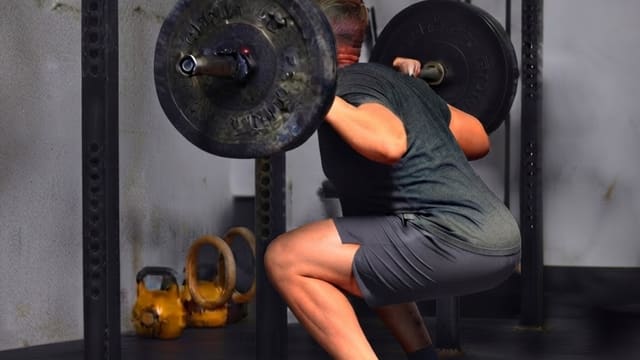 Video: About this plan
01Description
An intense and compact full-body training plan with a focus on squats. What makes this program unique is that you perform high-intensity squats using a 20-rep breathing squat pattern. Designed for 2 to 3 days per week over a short period, this is an excellent tool for breaking through squat plateaus and introducing new training stimuli.
02Overview
At a glance
Focus
AI & Progression
48 blocks use Progressions, with prescribed weights, equipment and training conditions to make each session as effective as possible.
03Training days
Each training day is divided into blocks. The app shows your reps, intensity and weights. AI Workouts are shown here as RX — the original version. In the app, AI adapts them to your level and equipment.
Interval
ProgressionCS
ProgressionCS
ProgressionRounds for Quality
ProgressionInterval
ProgressionCS
ProgressionCS
ProgressionRounds for Quality
ProgressionInterval
ProgressionCS
ProgressionCS
ProgressionRounds for Quality
ProgressionInterval
ProgressionCS
ProgressionCS
ProgressionRounds for Quality
ProgressionInterval
ProgressionCS
ProgressionCS
ProgressionRounds for Quality
ProgressionInterval
ProgressionCS
ProgressionCS
ProgressionRounds for Quality
ProgressionInterval
ProgressionCS
ProgressionCS
ProgressionRounds for Quality
ProgressionInterval
ProgressionCS
ProgressionCS
ProgressionRounds for Quality
ProgressionInterval
ProgressionCS
ProgressionCS
ProgressionRounds for Quality
ProgressionInterval
ProgressionCS
ProgressionCS
ProgressionRounds for Quality
ProgressionInterval
ProgressionCS
ProgressionCS
ProgressionRounds for Quality
ProgressionInterval
ProgressionCS
ProgressionCS
ProgressionRounds for Quality
Progression04Exercises
Our coaching team selected these exercises for your plan. If you need to swap one, we’ll suggest alternatives.
05Details
This plan really gets down to business. The focus is on “20-Rep Squats”: a single, brutal working set per session that turns a moderate starting load into a very long, heavy squat set through breathing pauses. The upper body follows a classic double progression. The result is a compact full-body plan with a clear focus on quadriceps, squat performance, and mental resilience.
Each session begins with either the bench press or the strict press. This is followed by a specific squat preparation set consisting of 8, 5, and 3 repetitions. Next comes the 20-rep set, and the workout concludes with the assistance exercises.
Routine "A" remains the same throughout the entire program for the bench press, double dumbbell incline seal rows, and barbell curls.
Scheme "B" combines Strict Press with Weighted Dips. The vertical pull exercise alternates between Weighted Pull-Ups and Weighted Chin-Ups on every B day. Therefore, there are no A1, A2, B1, or B2 days tied to specific calendar weeks. The schemes proceed continuously in the specified order.
You alternate between A and B and usually work out three times a week: Week 1 is A–B–A, Week 2 is B–A–B, and so on. This means that Schedule A occurs twice in one week and Schedule B occurs twice in the next.
If you aren't recovering sufficiently from the frequency or volume of your squats, or if you're also training in other sports, you can reduce your sessions to two per week. The order remains the same; the twelve sessions are then spread over six calendar weeks instead of four.
The plan uses relatively few traditional sets, but each set involves a very high load. The total duration of the block time caps is approximately 42 minutes. After the squat prep, there is an additional rest period of at least five minutes. Therefore, expect about 47 minutes of net training time. A general warm-up is also included; the specific squat prep is already part of the plan.
A cycle is complete after twelve sessions. This is followed by at least one deload week.
You'll need a standard gym setup: a barbell, squat rack, bench, pull-up bar, and dumbbells. A dip belt is useful for weighted pull-ups, weighted chin-ups, and weighted dips. Depending on your fitness level, resistance bands, dip bars, or rings may also be helpful.
Before each set of 20 reps, adjust the safety racks so that you can lower the barbell in a controlled manner if necessary. Without proper safety racks or another reliable safety measure, do not perform the set up to your technical maximum.
Intensity is controlled using RPE, RiR, and rep ranges:
RPE 10 = technical maximum; no further clean repetition would be possible.
RPE 9 = approximately 1 rep in reserve.
RPE 8 = about 2 reps in reserve.
RPE 7 = about 3 to 4 repetitions in reserve.
4+ RiR = at least 4 technically sound repetitions in reserve; for the heavy prep set of three, 5 to 6 RiR is usually optimal.
The bench press is performed in three sets of 6 to 8 repetitions. The strict press is performed in three sets of 12 to 15 repetitions. In the first set of each exercise, you determine an appropriate starting weight. Within each set, the weight remains the same for all three repetitions.
If you reach the upper limit in all three sets—that is, three sets of 8 reps for the bench press or three sets of 15 reps for the strict press—increase the weight by the smallest practical increment on the next corresponding A or B day. If you did not reach the upper limit in all sets, keep the weight the same.
If a set ends below the lower limit, pause briefly and add a few technically sound repetitions with the same weight until you reach a total of 6 or 12. These additional repetitions ensure that the intended minimum volume is met, but do not change the result of the original set: For the purposes of progression, a set of five repetitions is still considered a set below the target range.
In the first session, you'll choose your starting weight based on your fitness level.
Advanced athletes start with their 12RM,
Very advanced lifters with their 10RM.
Competitive athletes can use their 8RM, provided their technique, safety measures, and experience with very heavy breathing squats are up to par.
The lower the RM number you choose, the more aggressive and demanding the program becomes. Beginners should not attempt this progression. The program requires a solid squat technique and the ability to perform safe repetitions and adhere to clear stop criteria even when severely fatigued.
As soon as you need more time before the next repetition, hold the position at the top and take 1 to a maximum of 3 deep breaths. Then rebuild your body tension and perform the next repetition.
Here, too, RPE 10 represents a technical maximum. If it is no longer possible to perform another safe repetition with a stable range of motion, core engagement, and barbell position, the barbell is returned to the rack.
Here's how to proceed with the progression:
Managed 20 reps → next set: +2.5 kg.
Fewer than 20 repetitions → repeat with the same weight.
If you do fewer than 20 repetitions twice in a row → reduce the weight by 5 kg.
The Double Dumbbell Incline Seal Rows also use a double progression over five sets of 12 to 15 repetitions. Only once you can complete 15 clean repetitions in all five sets should you increase the weight by the smallest practical increment on your next A-day.
Barbell curls are kept at around an RPE of 8.5 and are adjusted based on how I feel that day.
Weighted pull-ups, weighted chin-ups, and weighted dips are adjusted for difficulty to approximately an RPE of 9. “Weighted” describes the target stimulus, not the requirement for an external load: If your body weight is already heavy enough, you’ll work without additional weight. If you can’t yet perform the target number of repetitions with just your body weight, use a resistance band. Additional weight is only added if the entire set would otherwise be too easy.
The eighth rep is light and helps set the rhythm of the movement. You’ll perform the set of five with exactly the same weight you’re using today for the 20-rep squats. This weight is labeled “W” (for “Working Weight”) in the plan. Since the 20-rep weight corresponds roughly to a load for 10 to 12 consecutive repetitions, you’ll typically still have about 5 to 7 repetitions left in reserve for the set of five.
For the final set of three reps, increase the weight slightly above today’s working weight based on how it feels. However, the set should remain clearly submaximal: at least 4 reps to failure, preferably around 5 to 6. The goal is to feel a slightly heavier load and to prime your body tension, walkout, and barbell position without causing significant fatigue.
After the set of three, take at least a five-minute break before starting the set of 20. If the set of three feels closer to 4 RiR at your limit, the load was too heavy.
This plan requires energy. If building muscle is your priority and your body weight remains stable, a moderate calorie surplus may be beneficial. A daily protein intake of approximately 1.6 to 2.0 grams per kilogram of body weight is a practical target range for many athletes. Adequate carbohydrates, hydration, and sleep are especially helpful for the recurring sets of 20 repetitions.
This program is not intended for beginners to squats. You need solid technique in back squats, bench press, strict press, and the辅助 exercises, as well as the ability to distinguish technical fatigue from normal muscle burn. If you follow the program consistently, it won't just be your legs that look more impressive in the rack.
06Membership
Train with all 40+ plans on Pro, with progression based on your strength levels.
–
Price currently unavailable
See membership options and prices
More plans in Functional BodybuildingAll plans in Functional Bodybuilding
 Back Building: “Upper Back, Lats & Posterior Chain”35 min · 9 weeks
 Build the Core: “12 Weeks of Functional Fitness”45 min · 12 weeks
 Chest Building: “Pecs, Arms & Shoulders”35 min · 9 weeks
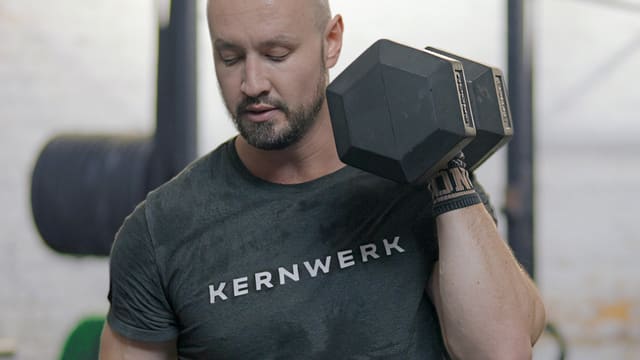 Dumbbell Snatch & Overhead Strength45 min · 5 weeks
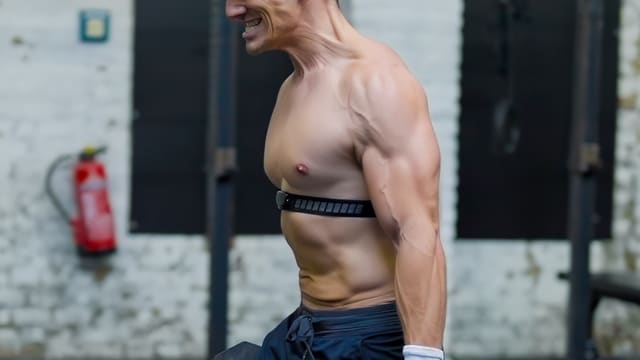 Full Body: Fat Loss35 min · 8 weeks
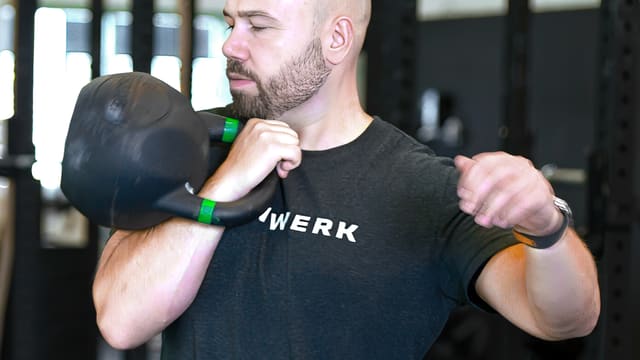 Kettlebell & Core Level 2: “5 Weeks with 2 Bells”45 min · 5 weeks
Sign up online, get the app and start training with a 60-day money-back guarantee.
Start plan60-day money-back guarantee. Register online, download the app and start training.