Strength I: Back Squats
Rounds for Quality
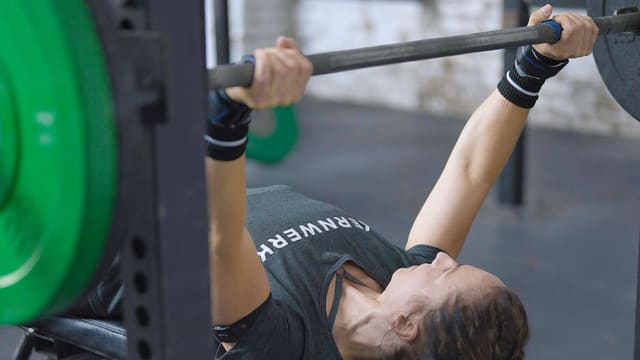
Progression- Back Squat
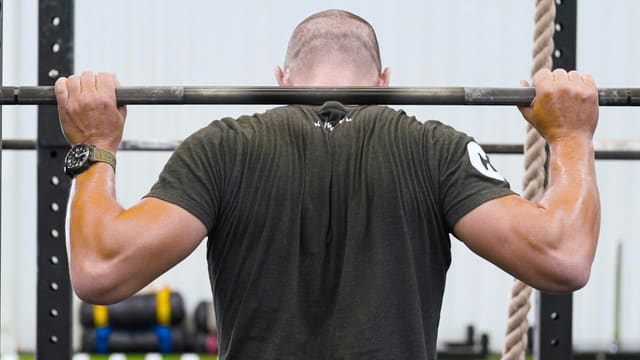
- Strict Pull Up
Specific Strength
60-day money-back guarantee. Register online, download the app and start training.
 Video: About this plan
01Description
Strength training at the gym for runners—and all hybrid athletes looking for a compact, full-body strength plan with a slight upper-body focus, two days a week. This includes heavy leg training, but paced in such a way that your running benefits from it rather than being hindered during training. In four short parts per session, we combine strength building, hypertrophy, stability training, and a good dose of core work for greater resilience on and off the running track.
02Overview
At a glance
Focus
AI & Progression
78 blocks use Progressions, with prescribed weights, equipment and training conditions to make each session as effective as possible.
03Training days
Each training day is divided into blocks. The app shows your reps, intensity and weights. AI Workouts are shown here as RX — the original version. In the app, AI adapts them to your level and equipment.
Rounds for Quality
ProgressionRounds for Quality
ProgressionInterval
ProgressionInterval
ProgressionInterval
ProgressionRounds for Quality
ProgressionRounds for Quality
ProgressionInterval
ProgressionRounds for Quality
ProgressionRounds for Quality
ProgressionInterval
ProgressionRounds for Quality
ProgressionInterval
ProgressionRounds for Quality
ProgressionRounds for Quality
ProgressionInterval
ProgressionRounds for Quality
ProgressionRounds for Quality
ProgressionInterval
ProgressionInterval
ProgressionInterval
ProgressionRounds for Quality
ProgressionRounds for Quality
ProgressionInterval
ProgressionRounds for Quality
ProgressionRounds for Quality
ProgressionInterval
ProgressionRounds for Quality
ProgressionInterval
ProgressionRounds for Quality
ProgressionRounds for Quality
ProgressionInterval
ProgressionRounds for Quality
ProgressionRounds for Quality
ProgressionInterval
ProgressionInterval
ProgressionInterval
ProgressionRounds for Quality
ProgressionRounds for Quality
ProgressionInterval
ProgressionRounds for Quality
ProgressionRounds for Quality
ProgressionInterval
ProgressionRounds for Quality
ProgressionInterval
ProgressionRounds for Quality
ProgressionRounds for Quality
ProgressionInterval
ProgressionRounds for Quality
ProgressionRounds for Quality
ProgressionInterval
ProgressionInterval
ProgressionInterval
ProgressionRounds for Quality
ProgressionRounds for Quality
ProgressionInterval
ProgressionRounds for Quality
ProgressionRounds for Quality
ProgressionInterval
ProgressionRounds for Quality
ProgressionInterval
ProgressionRounds for Quality
ProgressionRounds for Quality
ProgressionInterval
ProgressionRounds for Quality
ProgressionRounds for Quality
ProgressionInterval
ProgressionInterval
ProgressionInterval
ProgressionRounds for Quality
ProgressionRounds for Quality
ProgressionInterval
ProgressionRounds for Quality
ProgressionRounds for Quality
ProgressionInterval
ProgressionInterval
ProgressionRounds for Quality
ProgressionRounds for Quality
Progression04Exercises
Our coaching team selected these exercises for your plan. If you need to swap one, we’ll suggest alternatives.
05Details
Running is still running—but this plan builds the foundation for your running machine. “Hybrid Strength for Runners” is a structured strength training plan for runners who don’t just want to rack up kilometers, but also want to become more stable, stronger, and more resilient. “Hybrid” here means: keeping running performance in mind, but doing real strength training at the gym. You’ll train basic strength, explosive power, core stability, and robust pulling and pushing patterns using free weights and bodyweight exercises. The focus is on better power transfer, greater stability, and a body that doesn’t just somehow survive the stresses of running, but handles them better.
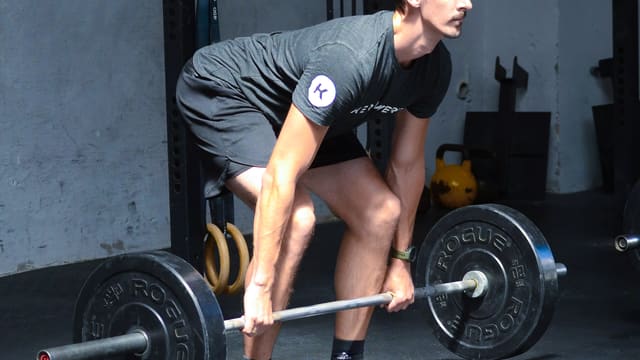
Each session typically consists of four distinct blocks. You’ll work on heavy compound exercises like squats, deadlifts, presses, and bench presses, supplemented by pull-ups, dips, rows, core work, and single-leg stability exercises. In addition, there are speed blocks featuring hang power cleans and push jerks. These exercises train explosiveness, hip extension, and rapid force development—exactly the things that often play a crucial yet often overlooked role in running. In short: this isn’t a wellness circuit, but running-specific strength training.
The plan consists of 20 sessions over 10 weeks. You’ll train twice a week. The first two weeks serve as a foundation phase, during which you’ll fine-tune your technique, rhythm, and exercise selection. After that, the weights increase gradually, while the number of repetitions in the main lifts decreases. During the peak phase, you’ll get more rest for heavy, clean reps. In the final weeks, the supplementary volume is partially reduced so that the focus is more on the main exercises.
Plan for about 40 to 55 minutes of actual training time per session. The shorter sessions tend to be on pure strength days, while speed and multi-block sessions tend to be at the upper end of that range. There should be at least one full day of rest between the two strength sessions. Ideally, schedule these sessions on days without a hard run or with a light running workload. Avoid scheduling this plan immediately before intervals, tempo runs, or long runs.
You don't need any machines as mandatory equipment. You'll need:
a barbell with a rack
a pair of dumbbells
a place to do pull-ups
Parallel bars or a stable alternative
Optional rings and resistance bands for scaling and variation
For the speed blocks featuring the Hang Power Clean and Push Jerk, a secure barbell setup is recommended. If you don’t feel confident performing these movements, use the dumbbell alternatives in the app. With this plan, technique trumps show.
The percentage-based Main Lifts are calculated based on your 5RM, not your 1RM. This keeps the workload realistic and manageable. For exercises with RPE guidelines, adjust the weight according to how you’re feeling that day. Especially for pull-ups, dips, HSPUs, and speed elements, it’s not just muscle strength that counts, but also technical quality.
RPE Guide:
RPE 10 or 0 RiR means: no more clean repetitions are possible
RPE 9 or 1 RiR leaves room for one more clean repetition
RPE 8 or 2 RiR is roughly equivalent to two clean repetitions in reserve
RPE 7 or 3 RiR means about three to four clean reps in reserve
For Olympic variations like the Hang Power Clean and Push Jerk, the technical limit is crucial. If your catch becomes wobbly, your jerk is pushed out slowly, or you’re just barely managing to complete the movement, you’re using too much weight for this plan.
The main lifts gradually increase beyond the plan. At the same time, the number of repetitions decreases from 8 to 7 and later to 6 repetitions per set. If you can’t handle a new weight cleanly, repeat the session after a 1- to 2-day break or play it safe during the next round. The goal is small, clean progress—not heroic maximum attempts between two running sessions.
For the Assist and Core blocks, you control the intensity using RPE and repetition quality. This is especially true for single-leg exercises, HSPUs, pull-ups, and dips: it’s better to choose an appropriate scaling than to wobble through the movement with poor form. Effective force transmission doesn’t come from chaos, but from controlled tension.
If you run regularly and incorporate strength training as well, energy availability is crucial. Make sure you’re getting enough calories, enough carbohydrates around intense workouts, and a solid protein intake of about 1.6 grams per kilogram of body weight daily. Hydration, sleep, and micronutrients like iron, magnesium, and potassium are also important for runners. You don’t necessarily need to be in a significant caloric surplus—but if you’re chronically undernourished, this plan won’t help you improve.
This plan is designed for runners who want to take strength training seriously. If you combine strength training and running on the same day, prioritize strength training first before easy runs. Before important running workouts such as intervals, tempo runs, or long runs, running should take priority, or the sessions should be spaced as far apart as possible. The goal of this plan isn’t to build muscle mass at any cost, but rather to gain more strength, improve posture, stabilize joints, and develop a body that can handle the stresses of running more effectively.
06Membership
Train with all 40+ plans on Pro, with progression based on your strength levels.
–
Price currently unavailable
See membership options and prices
More plans in Strength TrainingAll plans in Strength Training
Sign up online, get the app and start training with a 60-day money-back guarantee.
Start plan60-day money-back guarantee. Register online, download the app and start training.